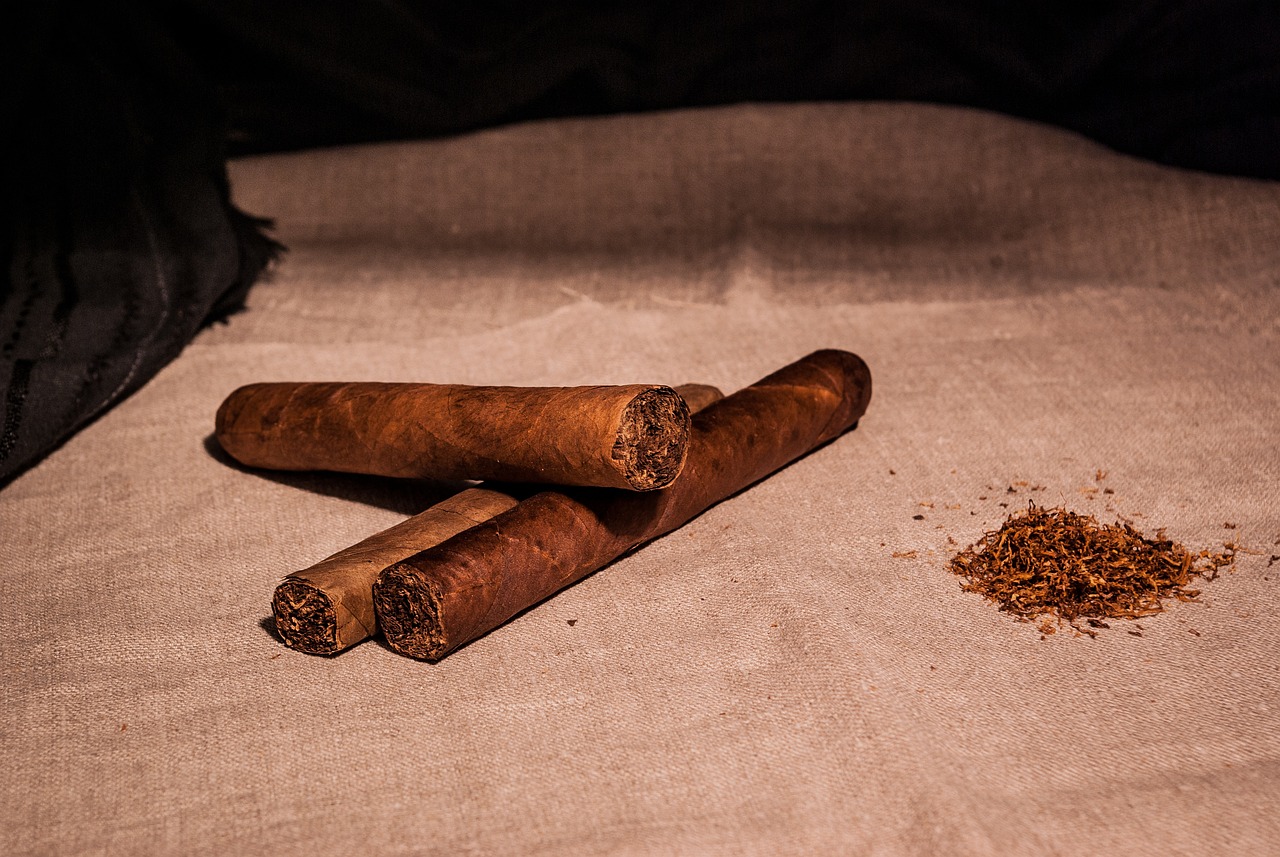
Cigar production - from tobacco fields to packaging

Cigar making is an art that has evolved over centuries. Each cigar that delights our senses goes through a long and complex process that begins in the tobacco fields and ends with the packaging of the finished product. In this article, we will take a detailed look at the steps in the cigar manufacturing process and discover how each phase contributes to the quality and uniqueness of cigars.

1. Growing tobacco

The cigar manufacturing process begins with the cultivation of the tobacco plants. The most famous tobacco growing regions are Cuba, the Dominican Republic, Nicaragua and Honduras. Soil quality, climate and cultivation methods play a key role in the taste and aroma of the tobacco.

  • Selection of seeds: each farm selects special seed varieties that are best suited to the climate and soil of the region. These seeds are sown under controlled conditions before being transplanted into the field.
  • Plant care: tobacco plants require careful care, including watering, fertilizing and pest protection. Each leaf is carefully monitored to ensure maximum quality.

2. Harvest and fermentation

Once the tobacco leaves reach maturity, they are harvested by hand. Harvesting is carried out in several stages, with the lowest leaves being harvested first.

  • Fermentation: the harvested leaves undergo a fermentation process that is critical to developing the tobacco's flavour. The leaves are stacked and left to ferment under controlled conditions of temperature and humidity. This process can take several weeks to several months.
  • Drying: after fermentation, the leaves are air-dried in special dryers or under the sun. Drying can take several weeks and helps to stabilise the tobacco.

3. Sorting and ageing

Once the leaves are fermented and dried, they are sorted by colour, texture and size. This is an important step that ensures that only the best leaves will be used for cigar production.

  • Ageing: the sorted leaves are left to age for a period of several months to several years. Ageing allows the tobacco to develop a deeper and more complex flavour.

4. Manual rolling of cigars

Cigar rolling is an art that requires great skill and experience. Many of the world's finest cigars are hand-rolled by master rollers using traditional techniques.

  • Inside: the tobacco leaves for the inside of the cigar are carefully selected and arranged in a specific way to ensure an even burn and rich flavour.
  • The Coil: the inside is enveloped with a scroll which holds the tobacco together and gives shape to the cigar.
  • Cover: the outermost layer of the cigar is the wrapper, which is extremely smooth and flawless. It gives a finished look and complements the flavour profile of the cigar.

5. Packing and storage

After rolling, the cigars go through a final quality control and are left to age once more to stabilize the flavor.

  • Packaging: finished cigars are packed in boxes or cedar wooden boxes that help maintain the moisture and aroma of the tobacco.
  • LabellingA: Each box contains information about the brand, type and characteristics of the cigars.

The cigar manufacturing process is complex and requires a lot of care and attention at every stage. Tobacco growing, fermentation, hand rolling and final packaging are just some of the steps that ensure the high quality of the final product. When we understand the effort that goes into creating each cigar, we can appreciate the pleasure of smoking it even more.

Share:

See also

CigarsBOX